Approach & impact

Assessment to scale, with the same people throughout.

We do not hand a plan over and leave. The team that walks your ponds and fields in the first week is the team that helps run the season and tells you honestly, at the end, what worked.

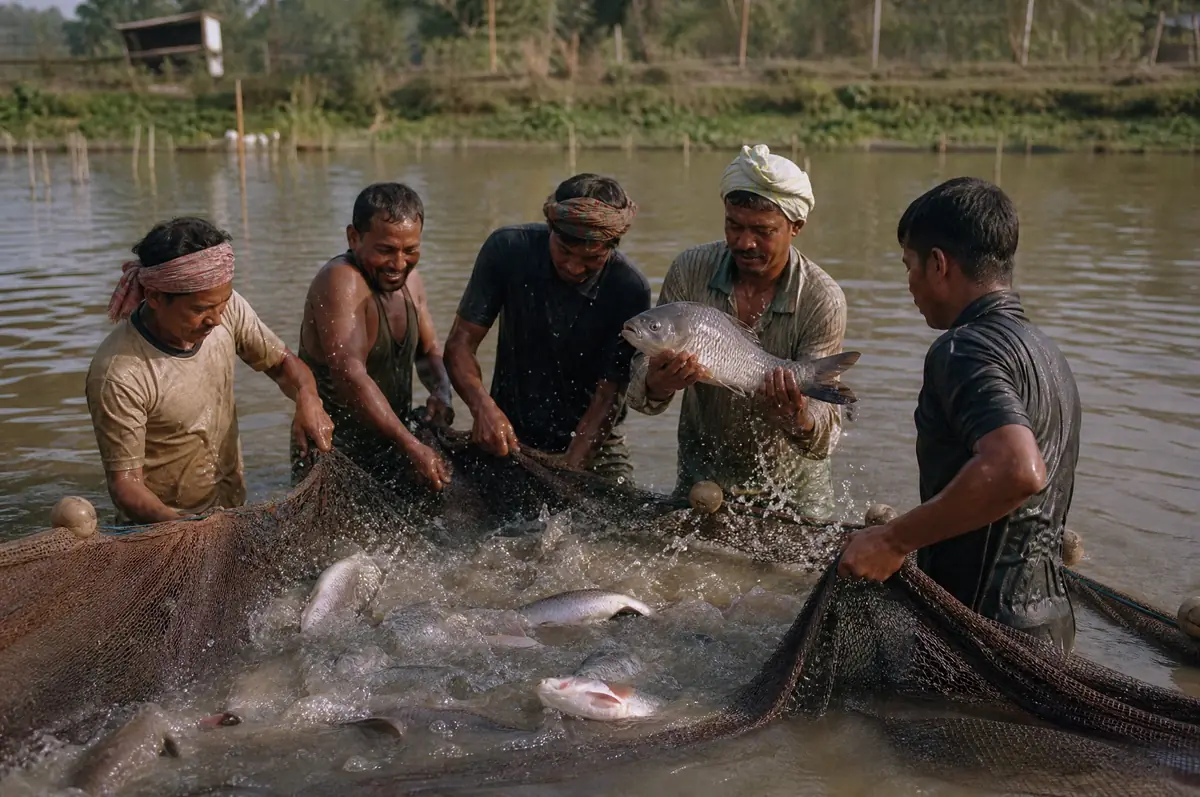
Men pull a drag net full of rohu and catla toward the bank of a village pond in Assam.
Nagaon, AssamA harvest we planned in February, stocked in April and sold in January.

What happens, and what you get at each step.

Not every assignment runs through all six. A feasibility study may stop at the second; a managed farm lives in the third and fourth. The order does not change.

  1. Assess

    Walk the site, read the records, talk to the people who will run it.

    Every engagement starts in the field. We look at ponds, plots and institutions as they are, not as the proposal describes them, and we listen to farmers, staff and officials before recommending anything.

    You get

    Diagnostic note or baseline

  2. Strategise

    Decide what is worth doing, and what it will honestly cost.

    We narrow the options to the few that fit the site, the budget and the people. The result is a plan a bank, a board or a department can approve, with its assumptions in plain view.

    You get

    DPR, strategy or theory of change

  3. Implement

    Training, inputs, linkages and handholding, on the bund.

    We work alongside farmers and field teams through the season: pond preparation, stocking, feeding, harvest and sale. Where we are the implementing partner, we are accountable for the numbers.

    You get

    Operating plan, trained teams, working linkages

  4. Monitor

    Track the handful of numbers that matter, every month.

    Simple monitoring that field staff can keep up: stock, feed, water, costs, sales and participation. Problems get spotted in weeks, not at the endline.

    You get

    MIS, dashboards, monthly field reports

  5. Learn

    Say what worked and what didn’t, in plain language.

    Midlines, endlines and reflection sessions that separate programme effects from good or bad seasons, and that name failures as clearly as successes.

    You get

    Evaluation reports, learning briefs

  6. Scale

    Take what works to the next block, district or state.

    Once a model has proved itself, we help take it further: scale-up plans, convergence proposals and the institutional arrangements that let it spread without us.

    You get

    Scale-up plan, convergence proposals

Three ways to work together.

Fees are fixed before work begins. If the scope changes, we agree the change in writing first.

  • For a defined deliverable

    Fixed-scope assignment

    A DPR, a baseline, a feasibility study or a training programme, with a fixed fee, timeline and deliverable list.

    Typical length: 2 to 14 weeks

  • For ongoing support

    Retained advisory

    A monthly retainer for FPOs, NGOs and CSR programmes that need a technical team on call, with scheduled field visits and reviews.

    Typical length: one season to three years

  • For delivery on the ground

    Implementation partner

    We run the programme or the farm ourselves, with agreed targets, monthly reporting and independent verification where the funder needs it.

    Typical length: two to five years

Good farming runs on the calendar.

Much of what goes wrong in a field or a pond was decided months earlier. This is the year we plan around in the Brahmaputra valley. Pick ponds or fields, then a month.

Grow-out

September

Watch the dawn oxygen

Overcast days pull dissolved oxygen down before sunrise. Aerate in the early hours, reduce feed on cloudy days, and lime after flood water has entered.

General guidance for Sali-based cropping and composite carp culture in the Brahmaputra valley. Local conditions and department advisories take priority.

How we behave in the field.

  • Consent first

    Every respondent is told who we are, why we are asking and what happens to their answers, in their own language, before we begin.

  • Women interview women

    Where it matters, we field gender-matched enumerators and hold separate discussions, so women’s views are heard, not relayed.

  • Data is protected

    Personal data is collected, stored and shared in line with the Digital Personal Data Protection Act, 2023, and anonymised before analysis.

  • Independence

    When we evaluate, we report what we find. We do not evaluate programmes we have implemented without saying so.

  • No hidden margins

    Where we buy seed, feed or equipment for clients, invoices are passed on at cost or at an agreed, declared margin.

  • Plain reporting

    Every report has a short version that a farmer group, a trustee or a district officer can read in ten minutes.

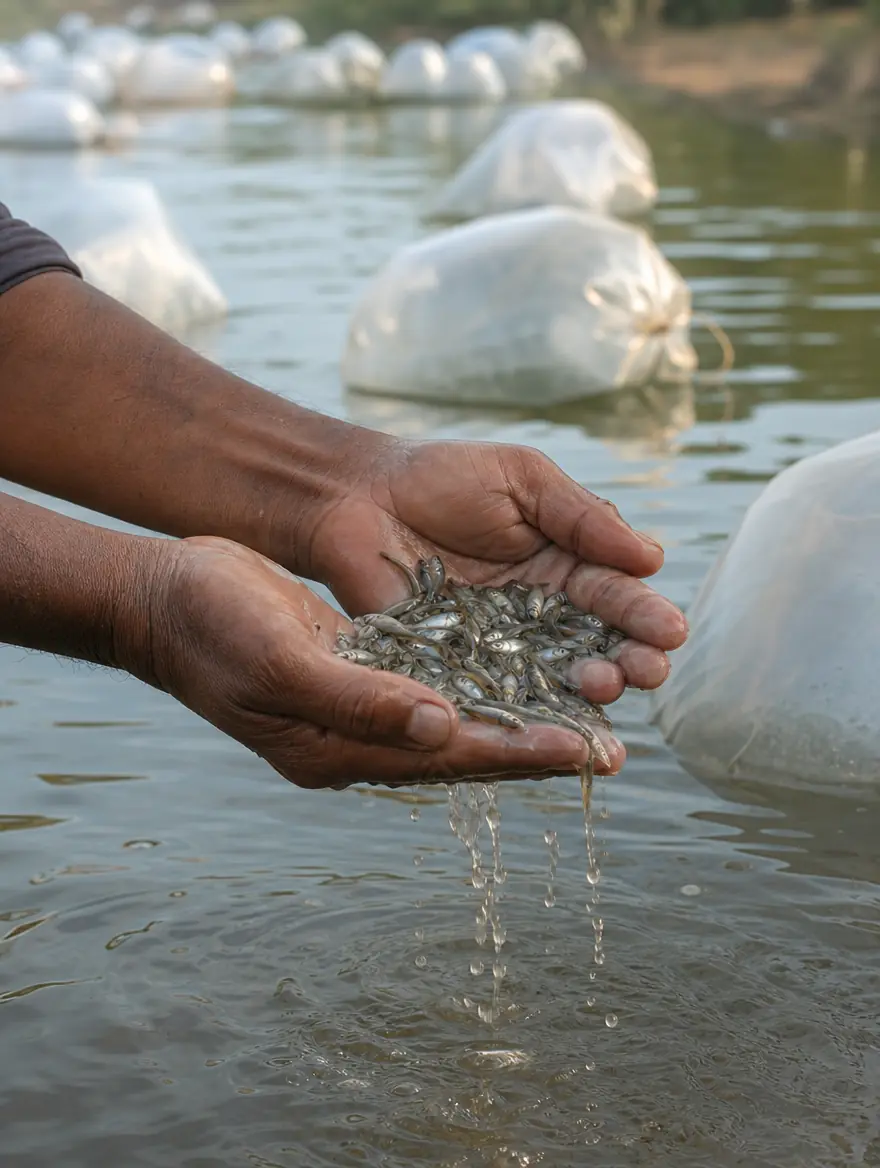
A farmer’s cupped hands lift tiny fingerlings from pond water during stocking.
Morigaon, AssamStocking day. Seed quality decides most of the season, so we check every batch.

What the work adds up to, so far.

We count what reached the field: money sanctioned, not proposals written; farmers trained in their own ponds and fields, not seats filled in a hall.

  • 80+

    DPRs and feasibility studies prepared

  • ₹52 cr

    in bank finance and scheme support mobilised for clients

  • 9,000+

    farmers and SHG members trained in their own ponds and fields

  • 70+

    FPOs, SHG federations and cooperatives supported

  • 25

    baselines, evaluations and impact studies

  • 3

    states: Assam, Meghalaya and Arunachal Pradesh

Where the work adds up.

Our assignments contribute to 11 of the 17 Sustainable Development Goals. Pick a goal to see how, and what we measure.

Goal 1

No poverty

Most of our work is about household income: more from the same field or pond, a second crop, a better price, a small enterprise that pays through the lean months.

What we measure

  • Household income by source
  • Share of households above the poverty line
  • Months of food and income security

Goals in colour are the ones our work contributes to. Icons follow the United Nations SDG icon set, used for information.

Have a farm, a programme or a problem worth solving?

Tell us what you are working on. A senior member of the team will call you back within two working days, usually sooner.