Consultancy
Plans a bank will fund and a farmer can actually run.
Most of our consultancy starts in a field, on a pond bund or in an SHG meeting, and ends in a bank branch or a department office. We design projects, write DPRs that survive appraisal, train farmers through a full season, and connect producers to the schemes, institutions and buyers they need.
Who it’s for
- Farmers
- FPOs & FPCs
- NGOs
- Corporates & CSR
- Philanthropies
- Government
How we engage
Fixed-scope assignments (a DPR typically takes 4-8 weeks) or season-long handholding from land or pond preparation to harvest and sale.
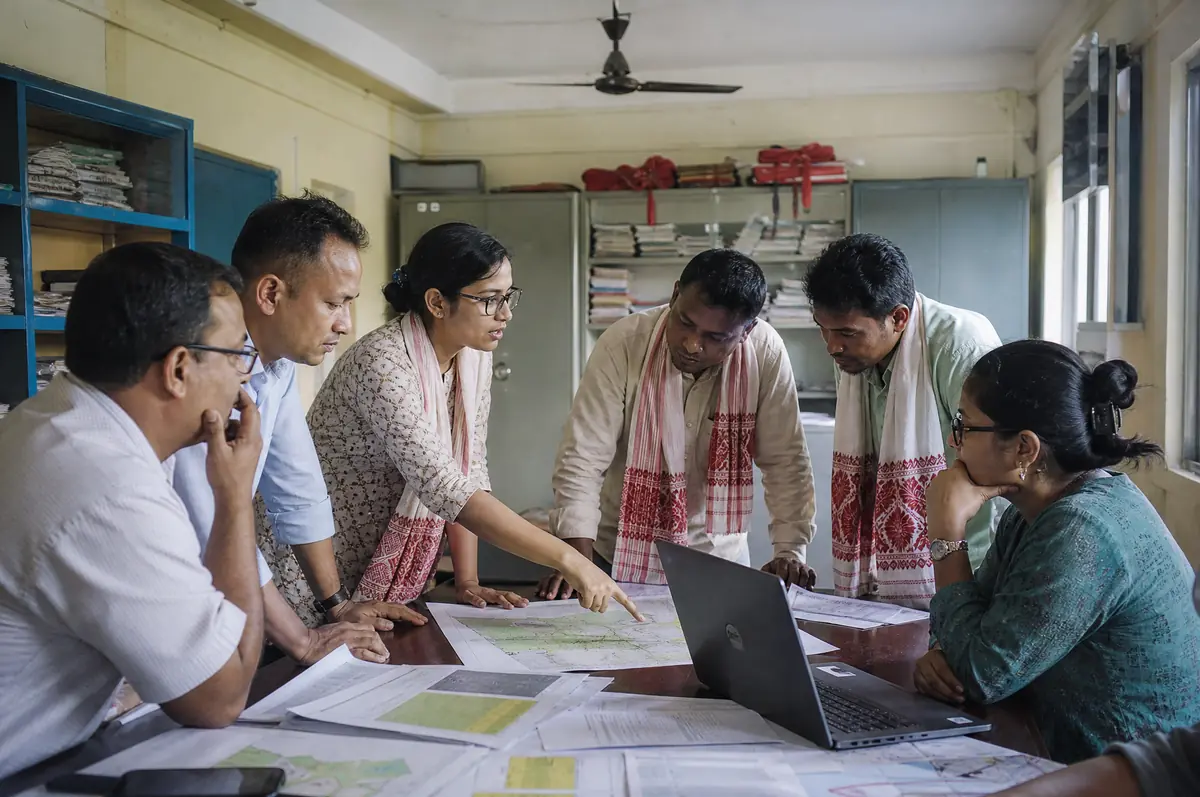
The work, item by item.
Take the full service or only the pieces you need. Every item below can be scoped as a stand-alone assignment.
Training & capacity building
Season-long training on the farmer’s own field or pond: crop packages of practice for paddy, oilseeds and vegetables, and for fish, pre-stocking, stocking and post-stocking management from pond preparation to harvest.
Livelihood programme design
Livelihood projects for NGOs, CSR teams and government: household targeting, enterprise selection, SHG and FPO pathways, budgets and results frameworks.
Fish & agri value addition
Fish pickle, soup, dry fish and cutlets; spices, rice and vegetable products. Recipes, hygiene, FSSAI registration, packaging, costing and first buyers.
Bankable Detailed Project Reports
DPRs in bank and NABARD appraisal formats, with yields, costs, cash flows and repayment schedules that hold up when a loan officer checks them.
Government scheme convergence
Matching your project with RKVY, PMMSY, NRLM, MGNREGS, state fisheries and agriculture schemes and others, and putting the paperwork together so they work in combination rather than in isolation.
Institutional linkages
Working introductions to fisheries and agriculture departments, KVKs, banks, input suppliers, hatcheries and research institutions.
DPRs for organisations & corporates
Programme-scale DPRs and concept notes for NGOs, CSR teams and companies entering aquaculture, agriculture or rural livelihoods.
Business strategy & planning
Business plans for FPOs, SHG enterprises, hatcheries, custom hiring centres and processing units: pricing, working capital, governance and a realistic growth path.
Learning material development
Manuals, flipbooks, short videos and field guides in Assamese, Bengali, Hindi and English, tested with farmers before they are printed.
Market linkages
Aggregation, grading, buyer agreements and logistics, so producers sell on agreed terms instead of taking whatever is offered at the farm gate.
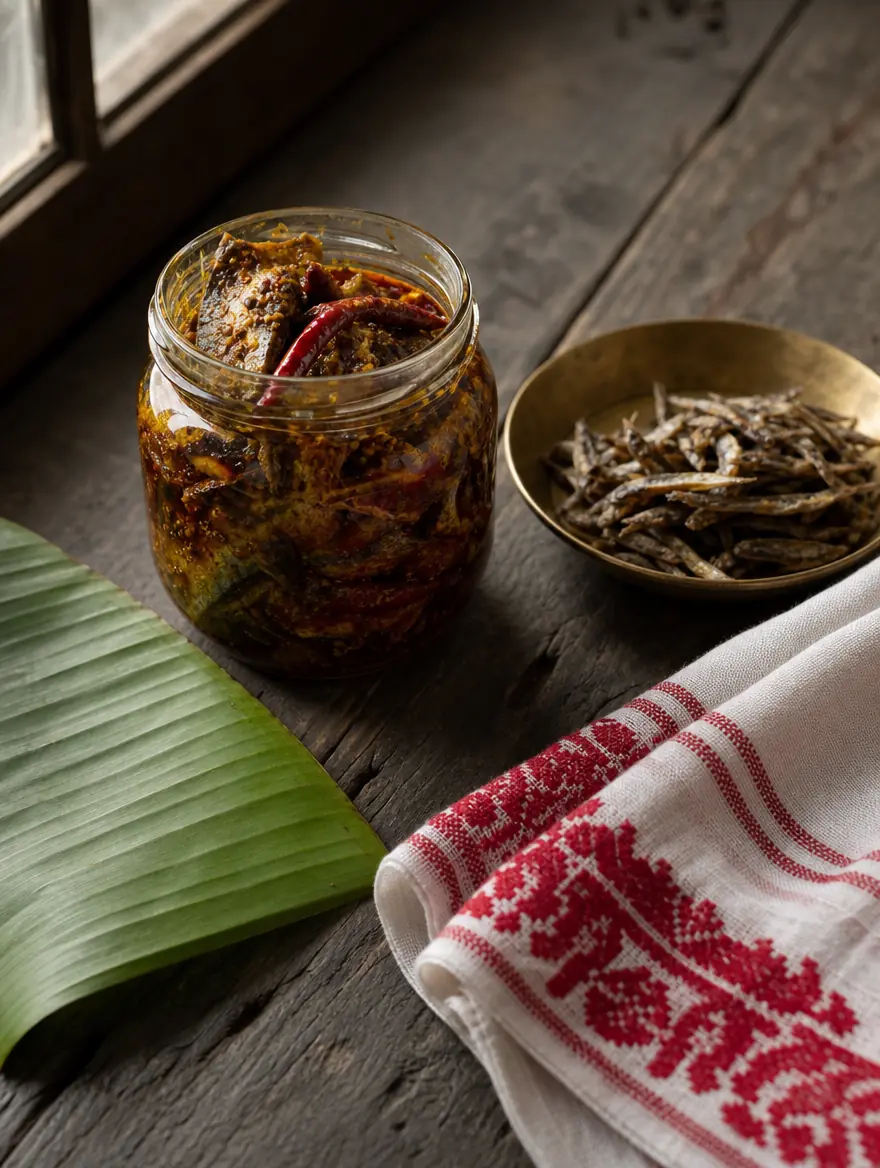
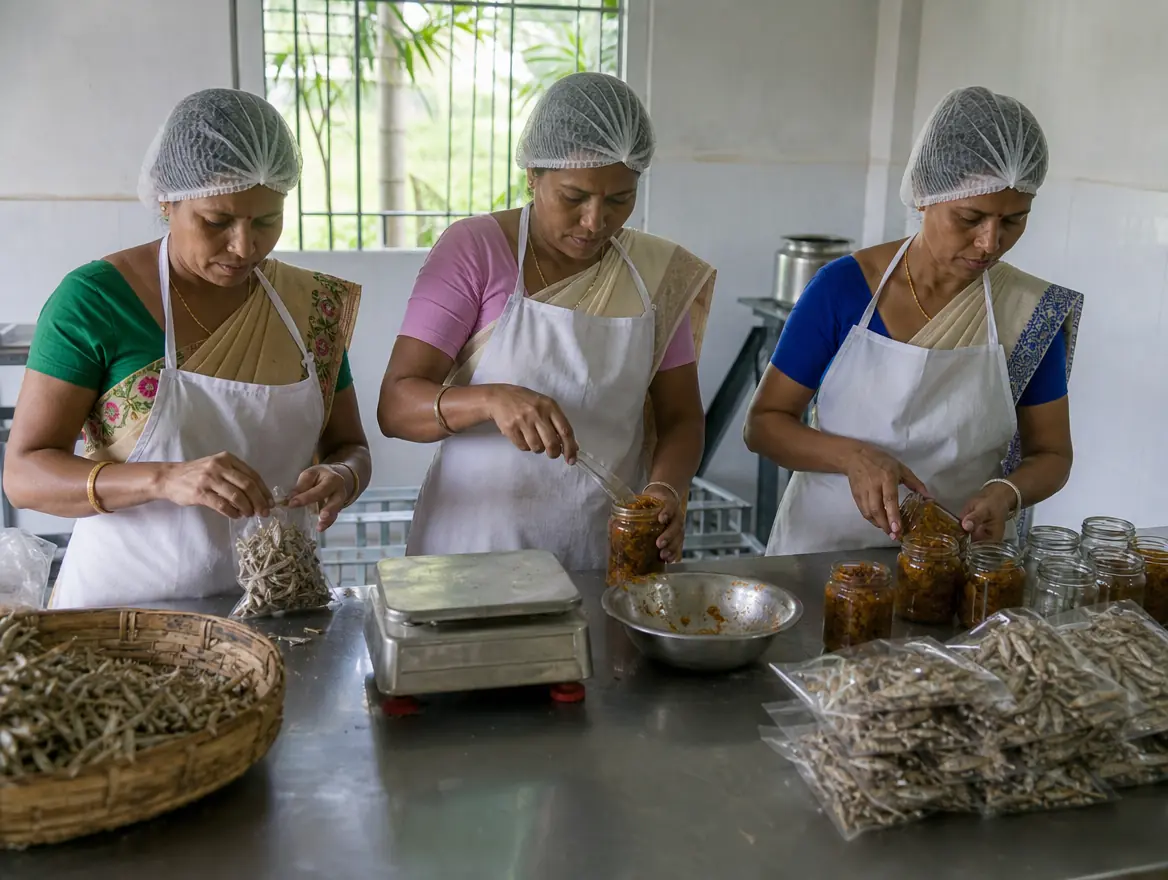
Small fish, sold for more.
Gluts of small fish sell for very little at the pond bank. Turned into products with a label, a shelf life and a buyer, the same catch earns several times more, and the work usually goes to women’s groups. We take producers from recipe to first order.
- Fish pickleMustard-oil recipes, shelf-life testing, glass and pouch packs
- Dry fishSolar and rack drying that meets food-safety norms
- Fish soupReady-to-cook premixes for retail and institutions
- Cutlets & ready-to-fryFrozen products for city retail and HoReCa buyers
Four steps, no surprises.
Site visit
We walk the ponds and fields, check soil and water, and meet the people who will run the project.
Scope & quote
A short note on what is worth doing, what it will cost and what we will deliver.
Build
DPR, training, linkages or business plan, drafted with you rather than for you.
Handhold
We stay through appraisal, first stocking or first sale, when things usually go wrong.
What you receive
- Bank-format DPR with financial model
- Livelihood project design
- Training modules and attendance records
- FPO business plan
- Scheme application dossiers
- Buyer agreements
What clients usually ask.
Something else? Call +91 93653 40780.
Will a bank accept your DPR?
Our DPRs follow the formats banks and NABARD use for appraisal, with yield and price assumptions drawn from the district, not from a textbook. We also stay available to answer the branch’s questions during appraisal.
Do you train in local languages?
Yes. Our trainers work in Assamese, Bengali, Hindi and English, and we bring in local resource persons for Bodo, Mising and other languages where needed.
Can you help us access government scheme support?
We identify which scheme components you are eligible for, prepare the documents, and help you follow up with the district agriculture or fisheries office. Sanction decisions rest with the department.
How much does a DPR cost?
It depends on the size and complexity of the project. We quote a fixed fee after an initial conversation and, where needed, a site visit.