Technology & Sustainable Farming
Lower input costs, lower emissions, better margins.
Carbon now shows up in farm economics: in input bills, in buyer requirements, and in emerging carbon finance. We help farmers and programmes adopt practices that cut waste and emissions without putting yields at risk.
Who it’s for
- Farmers
- FPOs & FPCs
- Corporates & CSR
- Government programmes
- Development projects
How we engage
Demonstration units on one or two farms, followed by a scale-up plan for an FPO, block or programme once the numbers are in.
The work, item by item.
Take the full service or only the pieces you need. Every item below can be scoped as a stand-alone assignment.
Precision agriculture & aquaculture
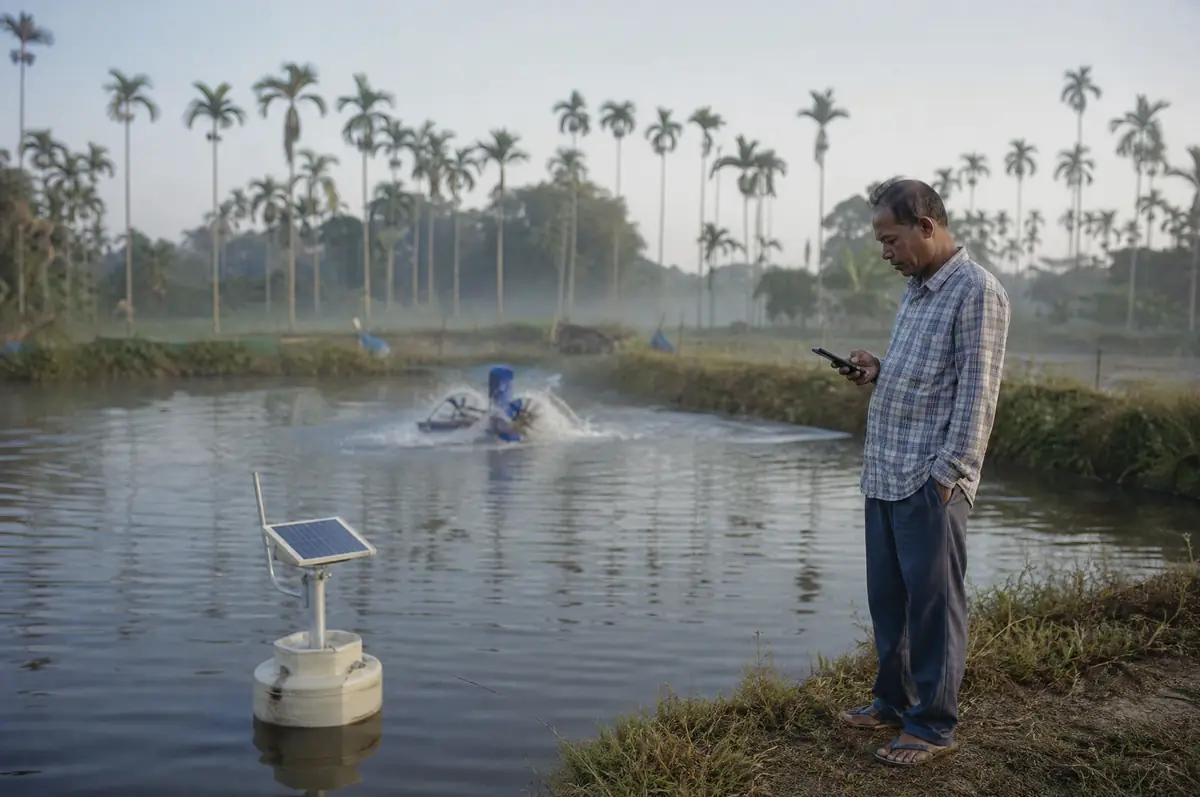
Water-quality sensors, aerator timers, feed calculators and simple farm records that replace guesswork with numbers a farmer can act on.
Integrated farming
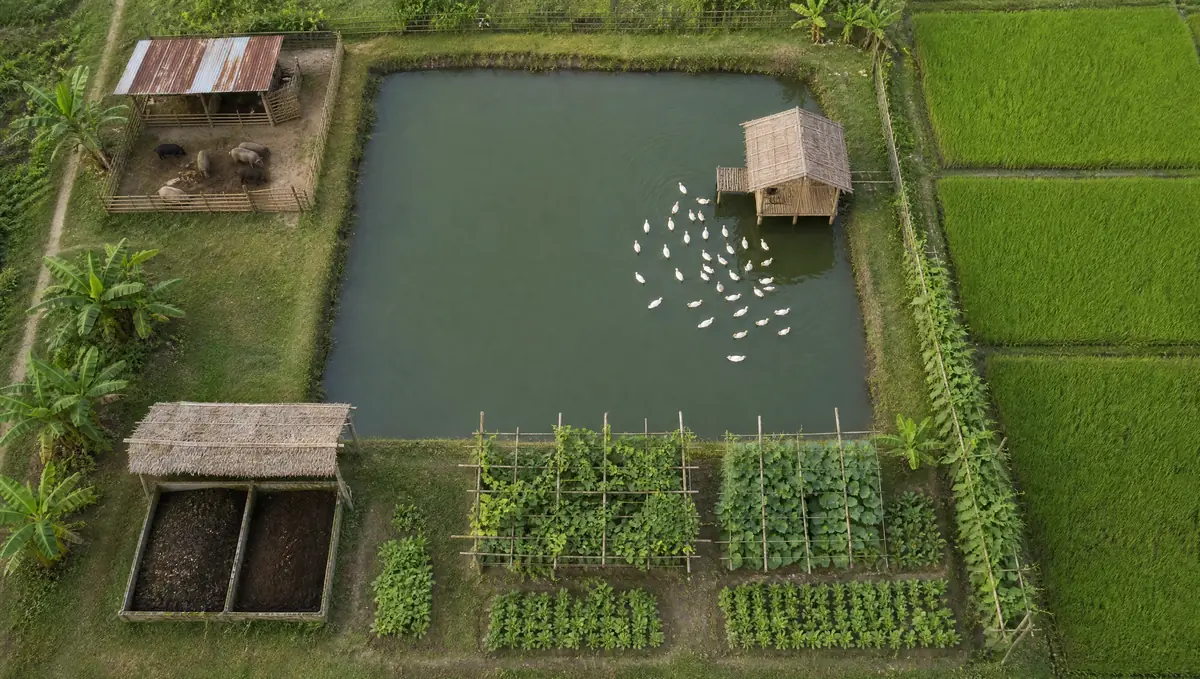
Fish with ducks, pigs, poultry, paddy and horticulture, laid out so that one enterprise’s waste becomes the next one’s input.
Zero-waste farming
Composting, pond-silt reuse, fish-waste silage and by-product value addition that turn waste streams into income.
Natural farming
Low-external-input practices in line with the National Mission on Natural Farming: bio-inputs, mulching and crop diversity, introduced plot by plot.
Integrated farming, seen from above.
Tap any part of the farm to see what it gives and takes. Switch between separate and integrated to see the difference in bought inputs and waste.
Six enterprises, run apart
Each part of the farm buys its own inputs and throws away its own waste. Switch to integrated to see what changes.
Gives
Takes
- Bought inputs
- 5 of 5 when separate, 2 of 5 when integrated
- Waste leaving the farm
- 4 of 5 when separate, 1 of 5 when integrated
- Income streams
- 2 of 5 when separate, 5 of 5 when integrated
- Fertiliser to the soil test
Applying fertiliser to soil-test results and crop stage, not habit, cuts the largest emissions source on most farms along with its cost.
- Aeration and feed on demand
Running aerators on dissolved-oxygen readings and feeding to fish weight cuts power, diesel and feed waste in ponds.
- Nutrients kept on the farm
Pond silt, duck litter and crop residue replace a share of purchased fertiliser.
- Records that count
Clean input and output records are the basis for any future carbon or sustainability claim.
Four steps, no surprises.
Farm audit
Inputs, energy, water and yields over the last cycle, as far as records allow.
Design
Choose the few changes with the best return for this farm and this budget.
Demonstrate
Install, train and run a full cycle alongside the farmer.
Measure & scale
Compare against the audit and plan the roll-out to other farms.
What you receive
- Farm technology plan and budget
- Installed and calibrated equipment (via vetted vendors)
- Integrated farm layout
- Farmer training and SOPs
- Input-reduction and emissions baseline
- Monitoring records template
What clients usually ask.
Something else? Call +91 93653 40780.
Is this technology affordable for small farmers?
We start with low-cost changes such as feeding schedules, records and aerator timing. Sensors and automation come in where the pond size and margins justify them, often shared through an FPO.
Can our farm earn carbon credits?
Small farms rarely qualify on their own. We help programmes and FPOs build the records and baselines that carbon and sustainability schemes ask for, so the option is open when it becomes viable.
Does natural farming reduce yields?
There can be a transition dip. We introduce practices plot by plot and measure results, so farmers are not asked to bet the whole farm at once.